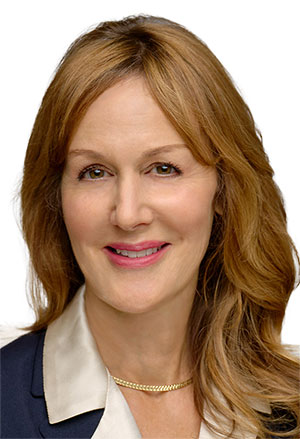
Many of the cases that June Bashant litigates are memorable, but one in particular is forever seared in her mind: A multidistrict, multi-plaintiff lawsuit involving personal injury and wrongful death claims arising from a hantavirus outbreak in Yosemite National Park in the summer of 2012.
Ten people were infected by the dangerous virus spread by deer mice; three people died. All had lodged in “glamping” tent cabins in Yosemite’s Curry Village. The double-walled tents were allegedly infested with mice, a hazardous proximity that defendants were informed of but failed to properly mitigate. Bashant represented the family of one of the hantavirus victims. Terms of the settlement are confidential.
“It’s always haunted me because this is what I’m talking about when I talk about the ‘unwitting consumer,’” Bashant said in a recent interview. “I think as a consumer, you walk around assuming that things are done correctly and that they’re safe and you’re not going to get hurt. And it’s been my experience over the past 27 years, it’s the opposite of that. We’re all lucky that we’re not getting hurt every single day.”
Bashant is a partner with San Francisco-based Rouda Feder Tietjen & McGuinn, focusing on catastrophic injuries, product liability, and wrongful death litigation. She has been with Rouda Feder Tietjen & McGuinn since 1999, just two years after being admitted to the State Bar of California, and after a short stint in insurance coverage litigation.
Over the course of her career, Bashant’s work has resulted in improved safety standards and consumer protections. Negligence is often at the root of the cases Bashant takes on.
“Every time I pick up a case, it’s always the same situation: There are systemic failures that result in tasks not being completed, or there’s no procedure for something to be checked, or the employees aren’t following the rules,” Bashant explained. “As a consumer, you have this expectation that people are doing their jobs and will take care of you.”
For instance, she handled a lawsuit related to a 2017 workplace shooting at a United Parcel Service shipping facility in San Francisco’s Potrero Hill neighborhood. The alleged shooter set off the metal detector when he walked through the employee entrance, but was allowed by security guards to proceed. He ultimately killed three co-workers before fatally shooting himself.
“No one checked the shooter’s backpack,” Bashant said. “It’s the same thing: policies and procedures weren’t followed.”
UCSF lawsuit
Such was the case when Bashant represented a Sonoma woman who was mistakenly injected with formalin – a form of formaldehyde – instead of the anesthetic lidocaine during a medical procedure to treat a uterine fibroid. The two fluids were accidentally placed next to each other during the procedure at a UCSF teaching hospital. It was a preventable medication error.
“That was a huge mistake that they would take the wrong thing off the table and inject it into a very sensitive area of the body,” said Bashant, noting the patient sustained pelvic nerve damage and now lives with chronic pain. “She’ll likely have lifelong injuries from that.”
Bashant argued that the injury and the provider’s conduct met the criteria not only for medical malpractice but also for medical battery, thereby affording the patient greater recourse. In 2024, Bashant secured a $15 million settlement against The Regents of the University of California in the medical battery and negligence case.
Medical battery claims call into question procedures conducted without consent; in the UCSF case, the patient consented to the use of lidocaine, not formaldehyde. These kinds of situations push healthcare institutions to take responsibility for the harm done, and to update their employee training, safety protocols, and medication handling, Bashant said.
Cannabis cases
In recent years, Bashant has become a subject matter expert on high-potency THC products that can be vaped, particularly as they affect teenagers’ mental health. Amid rising instances of cannabis-induced psychosis among teens, Bashant has led her firm’s handling of multiple lawsuits against cannabis vape product makers like the brand STIIIZY.
Bashant said many of the cannabis vaping products are marketed to teenagers without adequate risk warnings. Instead, the companies advertise fruity and dessert flavors, stylish vape pens, and claims of reduced stress and anxiety.
Since teens can vape discreetly, they’re ingesting high-potency cannabis more frequently than they might if they were smoking an old-fashioned rolled joint.
Explained Bashant: “There’s really never been a product where you could be at school, you could be at a sports practice, you could be in church, you could be at home in your bedroom, you could be anywhere. And you’re able to inhale it without anyone knowing because you can’t smell it.”
The onus is on plaintiffs’ attorneys to argue the harmful effects of these vaping products on still-developing adolescent brains, such as cannabis-induced psychosis that can lead to episodic or lasting bouts of paranoia and hallucinations.
“So, it’s a tricky area because I think a lot of people look at marijuana and say, ‘Oh, it has medicinal purposes,’” Bashant said. “I think the press and the propaganda around cannabis has always been, ‘It’s not that bad, right? It’s organic, it’s a plant, it’s not terrible.’ But in reality, that’s just not what the studies show.”
Among Bashant’s lawsuits against STIIIZY was the case of a high school honor student and athlete who learned about the cannabis vape product on social media. Hoping to alleviate stress and anxiety, he began vaping. After a family vacation during which he didn’t vape, he returned to the habit with alarming results. He became belligerent and delusional, hearing voices and convinced that aliens were trying to kill him. His parents called the police, who took him to a psychiatric facility. The medical team suspected cannabis-induced psychosis.
Bashant’s client, referred to in the lawsuit as John Doe, was prescribed antipsychotic medications, therapy, and warned to never vape THC again or risk permanent psychosis.
Professional organizations
Given her expertise in teen cannabis vape litigation, Bashant is one of three founding leaders of the new Cannabis Victims Law Center. Along with Gerard Sharp partner Sarah London and Ribera Law Firm founder Sandra Ribera Speed, the San Francisco attorneys are providing legal assistance and advocacy for teens and their families affected by cannabis vaping products.
The Cannabis Victims Law Center hosts a website with resources for families, including research about cannabis vape products, news stories, and information about recent lawsuits.
Bashant said she finds that attorneys involved in consumer litigation tend to be willing to collaborate and lend a hand to their peers in the legal community.
“At the end of the day, we’re not just helping each other. The goal of the work that we do is really to help the consumer,” she said.
Bashant is a member of the Western Trial Lawyers Association, the San Francisco Trial Lawyers Association, the American Association for Justice, and Consumer Attorneys of California.
She’s frequently called upon to speak on panels and at conferences on topics including mediation, negotiation, and the presentation of trial evidence. Last summer, she spoke at the Western Trial Lawyers Association seminar in Hawaii on teen cannabis-vape litigation and complex discovery in mass-tort cases.
“I think it’s really, really important for lawyers to group together and learn from each other,” she said. “I appreciate the educational value of those organizations because you come together with your peers, you are doing the same work, and you’re learning from them. And that raises the bar for all of us.”
Client focus
Bashant said she prefers to take on cases with a certain degree of complexity.
“I think I’m always the one who’s up for a challenge,” she said. “I feel like every case on my desk is just so challenging. I never have the case that’s a clear liability.”
She’s also drawn to lawsuits in which the clients have a compelling story to tell.
“Clients are the key to the entire case – what they’ve been through, their story, what it’s done to them, the impact. All of it,” Bashant said.
Rouda Feder Tietjen & McGuinn handpicks cases based on those stories, she said, and the firm’s six lawyers are invested in the clients’ outcomes.
“It’s just a very close relationship and, particularly at this firm, I think that’s what makes us so unique. It’s a client-centered approach to our practice,” she said. “We like our clients, and we want to go to bat for them all the time. I’m ready and willing to work on a weekend because I like them and I want to protect their future.”
Though she puts in work on weekends, Bashant said she often has the television on in the background to watch college basketball. Her two children attend colleges with tournament-worthy teams: Gonzaga University’s Bulldogs and Purdue University’s Boilermakers.
As her children have grown, she hopes to pursue more hobbies, including leisure travel, more time in the gym and on her bike, and reconnecting with old friends.
Bashant said she’s stayed in touch with past clients over the years, including those involved in the Yosemite hantavirus case.
“I think that is what makes this firm, and maybe me, unique, is that it’s all about doing the right thing because people stay in your lives. It’s not a transaction. It’s a relationship that you’ll always have,” she said. “That’s how I treat my clients because it’s how I treat everybody in my life – that they’re going to be around forever.”
“That’s why you do excellent work for them, because that’s what you would do for your family and friends as well,” she said.
Jennifer McEntee is a freelance writer based in San Diego.