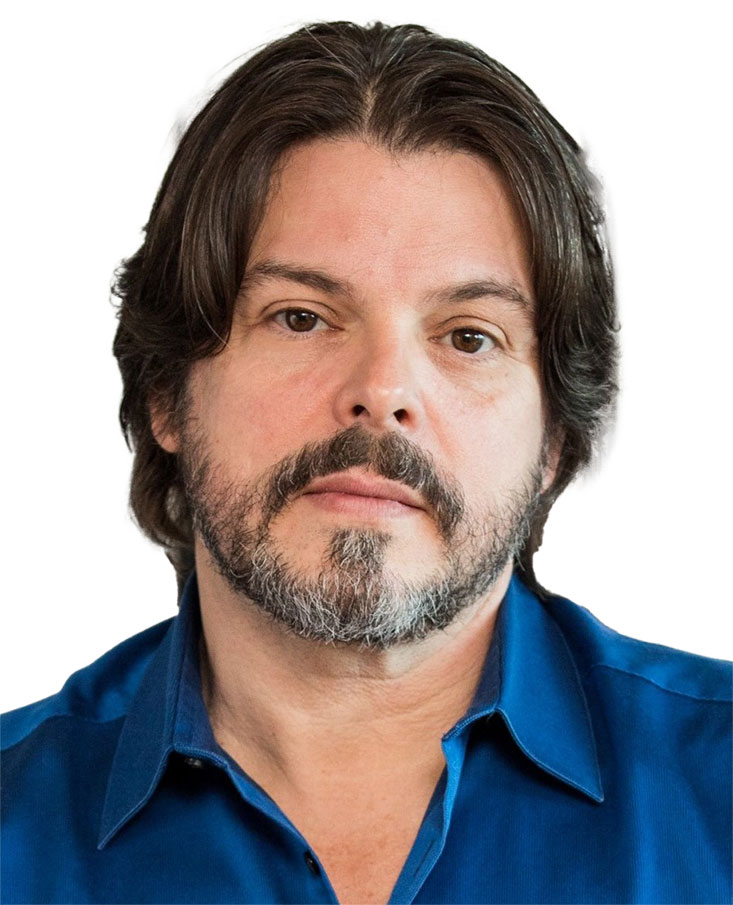
“No matter how much money I got them, no one has ever said, ‘Boy, I’m glad I got hurt.’”
Quinton Cutlip is not the sort of attorney with a splashy online marketing presence. You can find his profile on LinkedIn and Super Lawyers, but he purposely doesn’t have a website for his San Bruno-based law firm, Cutlip Law Office, PC. As a sole practitioner since 2020, he prefers to gain clients through word of mouth and by reputation. It keeps his personal-injury caseload personable and focused.
“I’m looking to get clients and do a very good job for them and do the best I can to bring about the best resolution based upon the facts and circumstances of their case,” Cutlip said in a recent interview.
His reputation speaks for itself. He successfully obtained an extraordinary writ of mandate from the First District Court of Appeal to protect an injured client from an improper mental examination during the course of litigation; the decision in Carpenter v. Superior Court (2006) 141 Cal.App.4th 249 set legal precedent and is often cited in guidebooks and legal treatises for California attorneys.
He also earned the San Francisco Trial Lawyers Association’s Trial Lawyer of the Year Award in 2023 for his work as lead attorney on Awet Tekle v. David Hourigan. The vehicle collision case resulted in a jury verdict of $8.2 million in favor of the injured client.
“He went from being very active to being somebody who, in his late 20s, is walking around with a cane,” Cutlip explained, noting the man previously trained in martial arts. “I’m proud to say he called me a few weeks ago and told me that he found the surgery he wanted, he had it, and he’s doing much better. So, I feel like it really made an effect in that young man’s life.”
Cutlip said his work as a lawyer reflects his fascination with people and what makes them tick. He wants to make things right for people who’ve been wronged.
“As personal-injury attorneys, we get the opportunity to step in and learn about people’s lives, how they think, how they live, what their experiences have been,” Cutlip said. “And we have to understand our clients in order to be able to help defense attorneys, insurance companies, and juries understand what happened and why it’s so traumatic, why it’s had an effect on people’s lives.”
Early career
Cutlip earned his bachelor’s degree in psychology from Louisiana State University in his hometown of Baton Rouge. He initially became a communicable disease specialist in New Orleans, meeting with locals who had contracted syphilis or HIV to counsel them on treatments and how to prevent the spread of the diseases.
“It was a pretty gut-wrenching job. And after I did that for a year, I was like, I can’t keep doing this. I had three ulcers by the time I did that for a year. I went to law school, and I’ve never had another ulcer,” Cutlip said.
He attended the University of San Francisco School of Law, graduating in 1993 and gaining admission to the California State Bar that same year. After a short stint in Texas, where he was admitted to the State Bar in 1997 and is now voluntarily inactive, he returned to California to work for the now-retired consumer-advocacy attorney Joseph Carcione, Jr.
“Joe was a tough employer, but he was brilliant. And, you know, he taught me how to work really hard and how to focus on things,” Cutlip recalled.
Cutlip then worked for Fred Meis, a San Francisco attorney best known for representing AIDS patients in lawsuits against the city’s major blood bank in the 1980s.
“Fred was a real gentleman. I don’t know if I’ll ever be as much of a gentleman as he was,” Cutlip said.
Cutlip then served as a trial attorney at Dolan Law Firm under the tutelage of the firm’s founder, Christopher Dolan.
“If I had to give young attorneys just getting out of school any advice, I would say go find a hard boss to teach you. I’ve been very fortunate in that respect,” Cutlip said of his mentors. “You want somebody who’s got very high expectations and will hold you to that. They’ll put you through the wringer and give you a lot of different experiences.”
Among his most memorable cases while working for Fred Meis was one he was initially reluctant to take.
“I did not like the case. It sounded like a joke,” he said.
In 2002’s Bauman v. Caltrans, a prostitute leaving a methadone clinic spilled hot chocolate in her lap. She pulled over on the highway to clean it up, then struck a guardrail while trying to merge back onto the highway. The guardrail sliced into the car, severing her leg.
During his pretrial research, Cutlip learned that both the federal government and the California Department of Transportation were aware that the guardrails posed a danger.
“It turns out that that’s not an uncommon thing for these guardrails to spear people,” Cutlip said. “The long and short of it is, I realized that Caltrans had installed the guardrail improperly.”
The jury sided with his client, awarding her $6 million.
“The thing that stuck with me the most in that case was, I jumped up when they awarded the $6 million. I went over and hugged her, and she looked at me, and she said, ‘I’d rather have my leg,’” he said. “That taught me right then and there that these big recoveries don’t necessarily cover everything that these people have lost.”
The defense attorneys in traumatic injury cases often imply that the victim is looking for an easy windfall, according to Cutlip. In his experience, that just isn’t the reality.
“No matter how much money I got them, no one has ever said, ‘Boy, I’m glad I got hurt.’”
Representing TBI clients
Cutlip is known in the trial community for his work on traumatic brain injury cases, particularly for his role in obtaining the published opinion Carpenter v. Superior Court.
That precedent was established during Cutlip’s representation of client Robert Carpenter in a multimillion-dollar lawsuit against Yamaha Motor Corp., USA. Carpenter was seeking damages for personal injuries sustained while riding his Yamaha motorcycle at a motocross track. When a defective accelerator allegedly failed during a tabletop jump, Carpenter pitched forward and hit the ground headfirst, sustaining a litany of injuries: a broken neck, compressed vertebrae, fractured ribs, separated shoulder, bruised heart, broken teeth, damaged tongue, and, notably, a traumatic brain injury. Yamaha contended the accident was caused by rider error.
Conflict between the two legal sides arose when Yamaha’s attorneys requested that Carpenter undergo neurological and neuropsychological exams, without disclosing to Cutlip’s team which tests would be given.
“There’s a lot of abuse in the discovery process that the defense uses in traumatic brain injury cases. There are defense neurologists, neuropsychologists who make their living testifying that injured people are either faking, exaggerating, or that their mental, emotional, and cognitive problems were caused by anything else besides the accident,” Cutlip said.
Carpenter testified in his deposition that the TBI he sustained caused depression, anger, frustration, memory problems, and communication difficulties that affected his personality and his potential for employment.
Cutlip’s work before the court of appeals set greater protections for injury victims subjected to mental examinations, while also establishing that copyright protections don’t prevent plaintiffs’ attorneys from seeing the same test copies, test answers, and scoring materials received by the defense.
“Basically, what that court said was that the defense has to tell us ahead of time what test they intend for their neuropsychologists to give to the plaintiff. This way we can avoid some abuses early on,” Cutlip said. “We can look at it and cross-examine them about how silly some of the tests are that they give to plaintiffs to try to prove the plaintiffs are lying, cheating, faking, stealing, whatever they’re going to come up with and say.”
In the community
Cutlip served on the board of directors of the San Francisco Trial Lawyers Association from 2008 until 2025. “I just decided it’s time to give somebody else a crack at it,” he said about stepping down from the board after a 17-year tenure.
He’s still on the board of the San Mateo County Trial Lawyers Association, and is a member of the Consumer Attorneys of California and the American Association for Justice.
Networking with other lawyers in his field benefits the legal community at large and their clients, Cutlip explained.
“It’s a community of people who think the same way and who want to help each other. You know, I want to help the attorney, but I also want their client to do well. I know that they’re representing somebody who’s been put in a bad situation, and they deserve whatever they can get out of it,” he said.
In his home base of San Bruno, he’s volunteered to help make the streets safer for pedestrians, bicyclists, and drivers. He served on the San Bruno City Council’s Bicycle & Pedestrian Advisory Committee from 2023 to 2025, and was appointed to the city’s Complete Streets Committee in 2025.
“If somebody doesn’t get injured, that’s much better than getting injured and having a lawsuit. So, if we can create safer situations to prevent people from being injured, that’s a higher goal.”
At home, Cutlip and his wife are focused on their new rescue dog, a two-year-old female Doberman. The dog has a good disposition, but she’s still skittish around new people.
Cutlip said plaintiff law has been a good career path for him, as it satisfies his inherent curiosity about people and his desire to help those in tough situations.
“I liked the idea of plaintiffs’ work because you’re working and you’re helping people, you’re helping individuals, you’re helping somebody who’s been knocked down, and you’re picking them up, and you’re advocating for them,” said Cutlip. “You’re their champion.”
His work on behalf of injured clients has also given him opportunities to explore the inner workings of other professional fields. On any given day, he might be employing an expert to explain medical procedures, mechanical issues, or scientific discoveries, all so he can accurately relay that information to a jury.
“I’ve talked to some extremely bright people with a lot of credentials that I wouldn’t think most people get to talk to in their normal lives,” Cutlip said. “I always say, people get hurt in the darnedest of ways. None of these cases is exactly alike. You shouldn’t treat them like they’re exactly alike because people’s injuries are going to be different, and the mechanisms of their injuries are going to be different.
“It keeps you learning, and it’s just fascinating,” he said.
Jennifer McEntee is a freelance writer based in San Diego.